
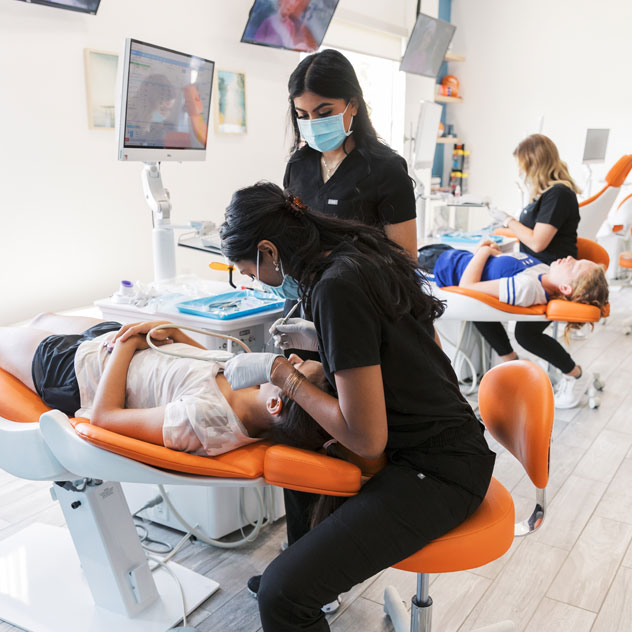
When your little one has a dental emergency, quick thinking makes all the difference. At OPD Smiles, we help families stay calm and take the right steps during these stressful moments. Below, you’ll find exactly what to do, when to call, and how to protect your child’s smile until you can see one of our board-certified specialists. A pediatric dental emergency can feel overwhelming, but a clear plan turns panic into action.
What Counts as a Pediatric Dental Emergency?
A pediatric dental emergency is any injury or condition involving trauma, severe pain, uncontrolled bleeding, or a knocked-out or loose tooth that needs prompt professional care. Common examples include a knocked-out permanent tooth, a cracked tooth, a dental abscess, or bleeding that won’t stop. These situations need attention within hours, not days.
Not every dental issue is an emergency. A tiny chip with no pain can usually wait for a regular visit. But a knocked-out permanent tooth? That’s urgent. So is swelling in the face, a tooth pushed out of position, or pain that keeps your child awake.
Baby teeth and permanent teeth call for different responses. A knocked-out baby tooth should never be reinserted, since that can harm the developing permanent tooth underneath. A knocked-out permanent tooth, on the other hand, needs to be placed back in the socket or stored in milk right away.
Call our practice immediately for:
- A knocked-out or displaced permanent tooth
- Severe, unrelenting pain
- Swelling in the face or gums
- A broken tooth with sharp edges or exposed nerve
Head straight to the ER for:
- Facial fractures or major head trauma
- Bleeding you can’t control after 15 minutes of pressure
- Difficulty breathing or swallowing
How Do I Respond Step-by-Step in a Child Dental Emergency?
Stay calm, assess the injury, take an immediate at-home step to protect the tooth or ease the pain, then call our practice. Fast action within the first hour dramatically improves outcomes for a knocked-out permanent tooth. Your calm response also helps set them at ease during a scary moment.
Follow these steps based on what happened:
What Should I Do for a Knocked-Out Permanent Tooth?
- Pick up the tooth by the crown (the white part), never the root.
- Rinse gently with milk or saline if it’s dirty. Don’t scrub.
- Try to reinsert it into the socket and have your child bite softly on gauze.
- If reinsertion isn’t possible, store the tooth in cold milk (not water).
- Get to our practice within 30 to 60 minutes.
What Should I Do for a Knocked-Out Baby Tooth?
Do not try to reinsert a baby tooth. Contact us right away so we can check for damage to the underlying permanent tooth. Control any bleeding with clean gauze and gentle pressure.
What Should I Do for a Broken or Chipped Tooth?
- Save any tooth fragments in milk or saline.
- Rinse your child’s mouth with warm water.
- Apply a cold compress outside the cheek to reduce swelling.
- Call our practice to schedule a same-day visit.
How Do I Handle My Child’s Toothache?
- Rinse with warm salt water.
- Gently floss around the tooth to remove trapped food.
- Apply a cold compress for swelling.
- Give age-appropriate pain relief as directed by your pediatrician. Never place aspirin directly on the gums.
What Should I Do for Bleeding or a Soft-Tissue Injury?
Apply clean gauze with firm, steady pressure for 10 to 15 minutes. Use a cold compress to control swelling. If bleeding continues, head to the ER. For deeper cuts to the lips, tongue, or cheeks, keep pressure steady and watch for signs that the bleeding is slowing before you move your child.
Why Does Fast Action Protect Your Child’s Smile?
Every minute matters in a dental emergency. According to the American Academy of Pediatric Dentistry, a knocked-out permanent tooth has the best chance of being saved when replanted within the first hour. Waiting even a little longer can mean the difference between saving the tooth and losing it for good.
Quick action also brings other benefits:
- Lower infection risk. Prompt care keeps bacteria from taking hold in damaged tissue.
- Less pain. Treating the injury early stops discomfort from getting worse overnight.
- Protection for developing teeth. Injuries to baby teeth can affect the permanent teeth growing underneath.
- Simpler treatment. Catching a problem early often means smaller repairs, not major work.
Fast, calm care also helps your child feel safe. That emotional side matters just as much as the clinical one, and it shapes how your little one remembers the whole experience.
When Is a Dental Issue Urgent vs. Non-Urgent?
Not every dental hiccup needs a same-day visit. Use this table as a quick reference for the most common situations we see:
| Injury Type | At-Home Step | Timeframe to See Dentist |
|---|---|---|
| Knocked-out permanent tooth | Reinsert or store in milk | Within 30-60 minutes |
| Knocked-out baby tooth | Control bleeding, do NOT reinsert | Same day |
| Large crack or broken tooth | Save fragments, cold compress | Same day |
| Dental abscess or facial swelling | Cold compress, call practice | Within hours |
| Minor chip, no pain | Rinse mouth | Regular visit |
| Severe toothache | Warm salt rinse, cold compress | Within 24 hours |
| Object stuck between teeth | Gently floss out | If unresolved, same day |
When to skip the dentist and go to the ER: facial fractures, jaw injuries, uncontrolled bleeding, or trouble breathing. Once your child is stable, follow up with our team for the dental side of the injury. Our pediatric dental care team can then handle repairs, monitoring, and any follow-up your little one needs.
What Affects the Cost of Emergency Dental Care?
Emergency dental care costs depend on the severity of the injury, the type of treatment needed, and whether sedation is used. A quick exam and small filling costs far less than a reimplantation or root canal. Insurance, sedation choices, and follow-up needs also shape the final price.
Key factors that affect cost include:
- Exam and X-rays to see what’s happening beneath the surface
- Type of treatment, from a simple restoration to extraction or reimplantation
- Sedation options if your child needs help staying comfortable
- Follow-up visits for monitoring or additional repair work
Most dental insurance plans cover a portion of emergency treatment. When you call OPD Smiles, our team can walk you through your coverage and discuss payment options that fit your family. We know a surprise dental emergency is stressful enough without worrying about the bill, so we keep the conversation open and honest from the very first call.
How Can I Prevent Dental Emergencies in Children?
Prevention is always easier than repair. A few simple habits protect little smiles from most common injuries:
- Wear a mouthguard for sports, biking, skating, and even trampoline time.
- Childproof your home to reduce falls, especially on stairs and hard flooring.
- Skip hard candy and ice chewing. Both are common culprits behind cracked teeth.
- Keep up with regular exams and cleanings. Catching cavities early prevents painful abscesses later.
- Teach little ones not to use teeth as tools for opening packages, biting nails, or tearing tags.
Preventing problems, promoting smiles. That’s the heart of what our board-certified pediatric dentists focus on every single day, and it’s why regular visits matter so much for growing smiles.
Our practice is home to board-certified specialists with years of specialty training after dental school. That extra training means our pediatric dentists and orthodontists know exactly how to handle emergencies involving baby teeth, developing permanent teeth, and anxious little patients. When a dental emergency hits, you want a team that understands children, communicates clearly with parents, and makes each visit feel like a five-star experience.
Frequently Asked Questions
Can a knocked-out baby tooth be put back?
No. Reinserting a baby tooth can damage the permanent tooth developing underneath. Instead, control any bleeding with gauze, keep your child calm, and reach out to your dentist right away so the underlying tooth can be checked for other injuries.
How long do I have to save a knocked-out permanent tooth?
Ideally within 30 to 60 minutes. The sooner that tooth is placed back in the socket or stored in cold milk, the better the odds of saving it. Hold it by the crown, rinse gently if needed, and get to a dentist as fast as you safely can.
What should I do if my child has a severe toothache at night?
Start with a warm salt water rinse and floss gently to clear any trapped food. A cold compress on the cheek helps with swelling, and age-appropriate pain relief works when your pediatrician approves it. Never place aspirin on the gums, and head to the ER if pain is severe or comes with swelling and fever.
Is a chipped tooth always an emergency?
Not always. A small chip with no pain and no sharp edges can usually wait for a regular visit. A larger break with pain, bleeding, or an exposed nerve should be seen the same day. When you’re unsure, a quick phone call helps you decide the safest next step.
How can I ease my child’s dental pain before the visit?
A cold compress eases swelling, soft foods reduce discomfort, and age-appropriate pain relief helps when directed by your pediatrician. Warm salt water rinses can also soothe irritated gums. Steer clear of aspirin or numbing gels directly on the gums, since those can cause more irritation.
When should I go to the ER instead of the dentist?
Go to the ER for facial fractures, jaw injuries, head trauma, uncontrolled bleeding, or trouble breathing or swallowing. Once your child is medically stable, follow up with a dental team so the tooth or gum injury gets proper care. The ER handles the medical side, while your dentist restores the smile.