
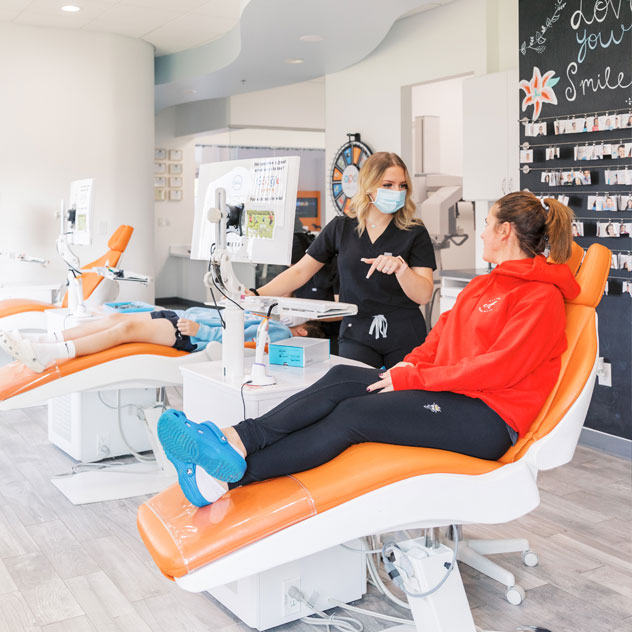
Wondering whether it’s time for braces? The most common signs include crowded or crooked teeth, gaps between teeth, difficulty chewing, mouth breathing, thumb sucking past age 4, and jaws that click or shift. Some signs are easy to spot at home, while others need a trained eye to catch. At OPD Smiles, our board-certified orthodontists help families know exactly when braces make sense, and we make the whole process feel calm and friendly for both parents and little ones.
What Does It Mean When a Child Needs Braces?
Braces are an orthodontic treatment that gently guides teeth and jaws into healthier positions as your child grows. When teeth come in crowded, crooked, or with bite problems, braces apply steady pressure over time to correct alignment. In short, a child needs braces when teeth or jaws aren’t lining up the way they should.
Some little ones need braces because of how their teeth fit together. Others need help because their jaws are growing in ways that affect bite, breathing, or speech.
A few clues are visible just by looking. Crowded front teeth, a noticeable overbite, or gaps that don’t seem to close on their own often catch a parent’s attention. But many issues live below the surface, like crowding of teeth that haven’t erupted yet or jaw growth concerns. That’s why an early orthodontic exam matters so much.
Catching things early gives our board-certified specialists a chance to plan ahead, sometimes preventing bigger issues down the road. You can learn more about our braces options and how they work for growing smiles.
Signs My Kid Needs Braces: Key Things to Watch For
You don’t need to be a dentist to spot the early signs. Here are the most common red flags parents notice at home:
- Crowded, crooked, or overlapping teeth. If new adult teeth are coming in twisted or stacked, there may not be enough room for them.
- Noticeable gaps or spacing. Wide spaces between teeth can point to bite or jaw size issues.
- Trouble chewing or biting. Watch for little ones who chew on one side, avoid certain foods, or bite their cheeks often.
- Early or late loss of baby teeth. Baby teeth typically fall out in a predictable order. When they don’t, alignment can suffer.
- Mouth breathing. Children who breathe through their mouth (especially at night) may have jaw or airway concerns worth checking.
- Thumb sucking past age 4. Long-term thumb or pacifier habits can push teeth out of place and reshape the developing palate.
- Speech difficulties. Lisps, trouble pronouncing certain sounds, or unclear speech can sometimes trace back to tooth or jaw position.
- Jaws that click, pop, or shift. Sounds or movement when your child opens and closes their mouth deserve a closer look.
One sign on its own doesn’t always mean braces are needed. But if you’re checking off two or three from this list, it’s a good time to book a free assessment.
What Are the Benefits of Treating Bite and Alignment Issues Early?
Straight teeth are about more than looks. When teeth and bites are properly aligned, your child’s whole mouth works better.
Here’s what early treatment can do for your little one:
- Healthier teeth and gums. Straight teeth are easier to brush and floss, which lowers the risk of cavities and gum problems.
- Better chewing and speech. A balanced bite makes it easier to eat, talk, and even breathe.
- A confidence boost. Little ones who feel good about their smile tend to smile more often, and that ripple effect is real.
- Less wear and jaw strain. Misaligned teeth can wear down unevenly and stress the jaw joints over time.
- Simpler care later on. When we guide jaw growth at the right age, future treatment is often shorter and less complex.
This is the heart of what we do at OPD Smiles: building bright futures, one tooth at a time. Early care today can mean fewer surprises tomorrow.
Why does early orthodontic care matter so much?
The years when adult teeth are coming in and jaws are still growing give us a natural advantage. During this window, gentle guidance can steer teeth and jaw development in the right direction with less effort than waiting until everything has set. That often means a smoother experience for your child and a healthier result you’ll both appreciate for years.
Can early treatment really prevent bigger problems later?
In many cases, yes. Addressing crossbites, crowding, or jaw growth concerns early can reduce the need for more involved treatment down the road. It can also lower the chance of teeth wearing unevenly or jaws developing discomfort. Our board-certified specialists watch for these patterns so families across Allen and Lucas can step in at just the right time.
What Are the Different Types of Bite Problems?
Bite problems come in a few common forms. Knowing what each one looks like helps you recognize when something seems off with your child’s smile.
| Bite Issue | What It Looks Like | Why It Matters |
|---|---|---|
| Overbite | Upper front teeth extend too far over the lower teeth | Can wear down lower teeth and stress the jaw |
| Underbite | Lower teeth sit in front of the upper teeth when biting | Affects chewing, speech, and facial profile |
| Crossbite | Some upper teeth fit inside the lower teeth side-to-side | Can cause uneven jaw growth and tooth wear |
| Open bite | Front teeth don’t touch when the back teeth are closed | Often linked to thumb sucking or tongue habits; affects biting and speech |
| Crowding | Not enough space for teeth to line up straight | Hard to clean, raises decay and gum disease risk |
| Spacing | Gaps between teeth that don’t close naturally | Can affect bite balance and confidence |
Left untreated, bite issues often get harder to fix as little ones grow. Teeth can wear down unevenly, jaws can develop discomfort, and confidence can take a hit.
Our orthodontists evaluate all of these during your child’s first visit. If treatment is needed, we’ll walk you through your options in plain language so you feel confident about the next step.
How Much Do Braces Cost for Children?
The cost of braces for children typically varies based on the type of braces, how complex the case is, and how long treatment takes. Traditional metal braces are usually the most budget-friendly option. Clear ceramic braces and Invisalign for teens generally cost more. Many dental insurance plans cover part of orthodontic care, and flexible payment plans can make treatment more manageable. At OPD Smiles, families across Allen and Lucas often ask us to break this down during their free assessment.
Here’s a quick look at how the main options compare:
| Treatment Type | General Cost Range | Best For |
|---|---|---|
| Metal Braces | Most affordable | Most bite and alignment issues |
| Clear/Ceramic Braces | Mid-range | Older little ones and teens wanting a subtle look |
| Invisalign Teen | Higher range | Responsible teens with mild to moderate cases |
Every smile is different, so the only way to know your child’s actual cost is with a personalized estimate. Curious about clear aligners? Take a look at our Invisalign Teen details too. At your free assessment, we’ll review your insurance, explain financing options, and give you a clear picture of what to expect, no pressure, no surprises.
At What Age Should My Child See an Orthodontist?
According to the American Association of Orthodontists, children should have their first orthodontic exam by age 7. By this age, enough adult teeth have come in for an orthodontist to spot developing issues like crossbites, crowding, or jaw concerns. Early exams don’t always mean early braces, but they give our team a chance to monitor growth and step in at the right time.
Most little ones actually start braces between ages 9 and 14, when a good mix of adult teeth are in place and jaw growth is still active. That growth window is a huge advantage. Teeth and jaws respond more easily to gentle guidance during these years, which is why so many families in Allen and Lucas plan that first visit early.
Some children benefit from Phase 1 treatment (early intervention) to address things like crossbites, severe crowding, or jaw growth issues before all adult teeth are in. A second phase later refines the smile.
Our board-certified specialists at OPD Smiles, with years of specialty training after dental school, will evaluate your child and recommend the ideal timing for treatment, whether that’s now, soon, or simply keeping an eye on things.
Frequently Asked Questions About Kids and Braces
How soon can my child get braces?
Most children get braces between ages 9 and 14, once enough adult teeth have come in. Some little ones benefit from earlier (Phase 1) treatment to address bite or jaw issues. The best way to know is with an orthodontic exam around age 7, even if treatment is still a few years away.
Do baby teeth need to fall out before braces?
Not always. Many little ones start treatment while a few baby teeth are still in place, especially for early intervention. Other cases work better once most adult teeth have arrived. Our orthodontists will look at your child’s mix of teeth and jaw growth to recommend the right timing.
How long do little ones wear braces?
Most children wear braces for about 12 to 24 months, though some cases are shorter and others longer. Treatment time depends on the complexity of the bite, how the teeth respond, and how well your child follows care instructions like wearing rubber bands.
Are there alternatives to metal braces for children?
Yes. Clear ceramic braces blend in more with natural teeth, and Invisalign Teen uses clear aligners instead of brackets and wires. The right choice depends on the bite issue, your child’s age, and how responsible they are with care. Our team will help you find the best fit.
How do we care for and clean braces?
Brushing after every meal, flossing daily (with floss threaders or a water flosser), and avoiding sticky, hard, or chewy foods are the basics. We’ll show your child exactly how to clean around brackets and wires at their first visit, and the staff will check in at every appointment to keep things on track.
Does my child need braces if teeth look straight?
Maybe. Straight-looking teeth can still have hidden bite issues like crossbites, deep bites, or jaw alignment concerns. That’s why a professional exam matters. Even if teeth look great, an orthodontist can check what’s happening below the surface and with how the jaws fit together.
If you’ve noticed any of the signs above, or if your child is approaching age 7 and hasn’t had an orthodontic exam yet, we’d love to meet your family. OPD Smiles in Allen, TX is proud to serve Allen, Lucas, and surrounding communities with a five-star experience your little ones will actually enjoy. Book a free assessment to start your child’s smile journey with our board-certified specialists.