

Dental sealants are thin, tooth-colored coatings painted onto the chewing surfaces of the back teeth to keep food and bacteria out of the deep grooves where most childhood cavities start. At OPD Smiles in Allen, TX, our pediatric dental team recommends sealants as a quick, comfortable way to protect your child’s molars, usually as part of a regular checkup and cleaning. There are no shots and no drilling, and most children are back to normal right away.
What are dental sealants, and how do they protect kids’ teeth?
Molars are built for grinding food, so their chewing surfaces are covered in pits and fissures. Many of these grooves are narrower than a single toothbrush bristle. Even a child who brushes well can’t fully clean them, and that is why the back teeth are where decay most often begins in school-age kids.
A sealant is a liquid resin that flows into those grooves and hardens into a smooth shield. Once the surface is sealed, plaque has nowhere to hide and a toothbrush can clean the tooth properly. According to the CDC, sealants prevent about 80% of cavities in the back teeth for two years and keep protecting against about half of cavities for up to four years. School-age children without sealants have almost three times as many cavities as children who have them.
Learning to brush well takes time, and the back teeth are the hardest part to reach. That is the reason our team recommends sealants as a swift, simple preventive step rather than waiting for a problem to show up.
Which teeth get sealants, and at what age?
Sealants go on the teeth with the deepest grooves: the permanent molars, and sometimes the premolars in front of them. Timing follows your child’s tooth eruption rather than a fixed birthday.
- First permanent molars: these usually come in around age 6, behind the last baby teeth. Many parents don’t realize they are permanent teeth at all.
- Second permanent molars: these usually arrive around age 12, which is often a second sealant visit.
- Premolars and deep-grooved baby molars: sealed case by case when the grooves are deep or your child has had cavities before.
The best window is soon after a molar has fully erupted, before decay has a chance to start. At each six-month visit, your child’s pediatric dentist checks which teeth have come in and whether they are ready to be sealed.
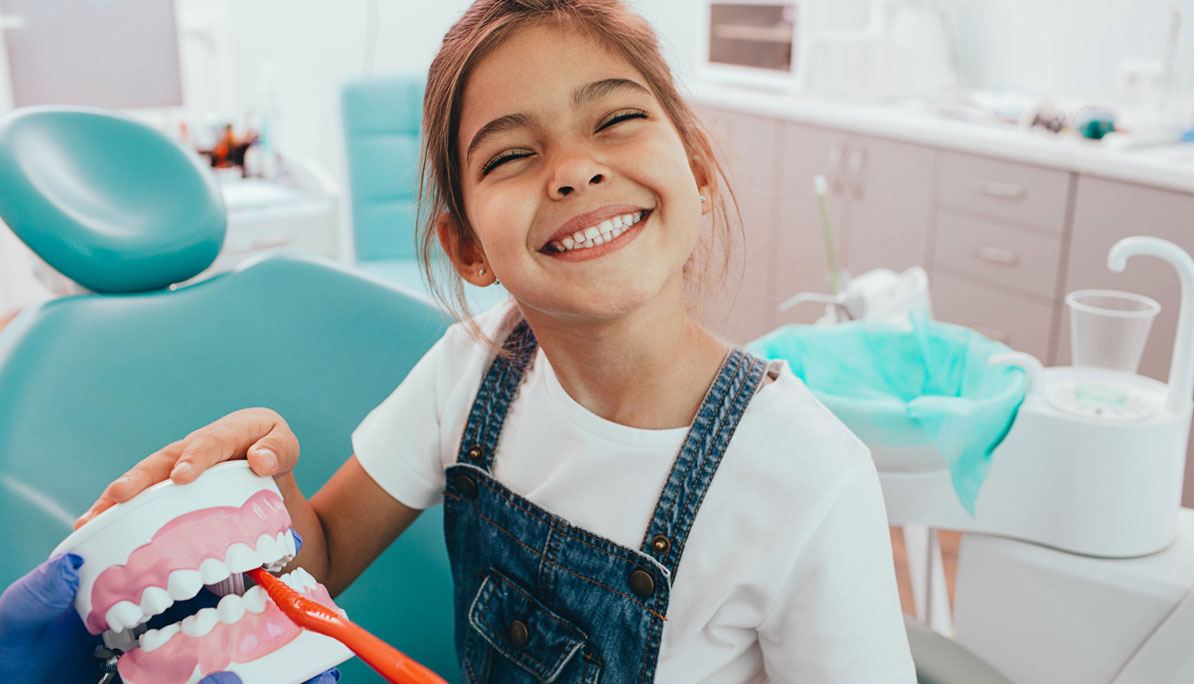
What happens at a sealant appointment at OPD Smiles?
Sealants are one of the easiest treatments a child can have. Most kids are surprised by how quick it is. A typical visit goes like this:
- Clean: we polish the chewing surfaces so the sealant bonds to clean enamel.
- Dry and prepare: the tooth is kept dry and a mild conditioning gel is applied to roughen the surface slightly, then rinsed off.
- Paint: the sealant is brushed into the grooves of each tooth.
- Harden: a special light sets the material in seconds.
- Check the bite: we make sure your child’s teeth come together comfortably.
No numbing is needed because nothing is removed from the tooth. Your child can eat and drink as usual after the visit. If your child has a checkup coming up, ask whether any teeth are ready to be sealed.
Sealants, fluoride or fillings: what is the difference?
Parents often ask how sealants fit with the other preventive and restorative care we provide. Each one does a different job:
| Treatment | What it does | Where it works | When we use it |
|---|---|---|---|
| Dental sealants | Physically seals deep grooves so plaque can’t collect | Chewing surfaces of back teeth | Soon after molars erupt, before decay starts |
| Professional fluoride (including silver diamine fluoride) | Strengthens enamel and makes it more resistant to decay | All tooth surfaces, including between teeth | During checkups and cleanings |
| Tooth-colored fillings | Repairs a tooth after a cavity has formed | Wherever decay has damaged the tooth | Once a cavity is found |
Sealants and fluoride work best together. Sealants protect the grooves, and fluoride protects the smooth surfaces and the spaces between teeth that sealants can’t reach. You can read more about both on our pediatric preventive care page. If a cavity has already formed, your child may need one of our tooth-colored fillings instead.
How long do sealants last, and how are they maintained?
A well-placed sealant can last for several years, often through the years when kids are most likely to get cavities. Chewing wears sealants down slowly over time, and hard or sticky habits such as chewing ice can chip them.
That is why sealants are checked at every routine visit. If one is worn or a small piece has come off, it can usually be touched up quickly without redoing the whole tooth. We recommend a preventive appointment about every six months, which gives us regular chances to keep your child’s sealants intact.
Are dental sealants safe for children?
Yes. Sealants have been used for decades and are recommended by national dental organizations for children’s permanent molars. The procedure is non-invasive, needs no anesthesia, and takes only minutes per tooth.
Some parents ask about BPA in dental materials. Research has found that any exposure from a sealant is extremely small, lower than what people encounter from everyday sources like food packaging and receipts. If you have questions about the specific materials we use, ask your child’s dentist at the appointment. We are always happy to explain.
What do sealants cost in Allen, and does insurance cover them?
Sealants cost far less than treating a cavity. Many dental plans cover sealants on children’s permanent molars, though coverage rules differ by plan, such as which teeth qualify and age limits. OPD Smiles is an in-network provider with most major dental insurance plans, and our team will walk you through your benefits with full transparency and file the claim for you.
For families without dental insurance, our in-office membership plan includes exams, cleanings, fluoride treatments and X-rays, and takes 20% off additional treatment such as sealants. See the costs and membership plan page for the current plan options.
Why do Allen and Lucas families choose OPD Smiles for sealants?
Sealants are a small procedure, but the experience matters. A visit that feels easy at age 6 makes the next ten years of checkups easier too. Here is what families get at our Allen office on South Angel Parkway:
- Pediatric specialists: Dr. Russell Choy, a board-certified pediatric dentist, and Dr. Momal Umrani completed specialty training in pediatric dentistry after dental school.
- A conservative approach: we focus on prevention so your child keeps as much natural tooth structure as possible.
- Low-radiation imaging: our all-digital X-rays use up to 80% less radiation than traditional X-rays.
- A kid-first office: our team is skilled at setting anxious children at ease, and kids can earn stamps toward our prize wheel.
- Local roots: we have taught oral health lessons at schools including Allen High School, Lovejoy High School and Vaughn Elementary. See more on our community page.
Dental sealant FAQs
Can sealants go on baby teeth?
Sometimes. If a baby molar has very deep grooves, or your child has already had cavities, your pediatric dentist may recommend sealing it. Most sealants, though, go on permanent molars because those teeth have to last a lifetime.
What if a tooth already has a small spot of decay?
Sealants are meant for healthy or very early surfaces. Your child’s dentist will examine each tooth first. If decay has broken through the enamel, the tooth needs a filling, not a sealant.
Do sealants mean my child can brush less?
No. Sealants protect the grooves on the chewing surfaces only. Twice-daily brushing with fluoride toothpaste, flossing, and limiting sugary snacks and drinks are still essential.
Can my child get sealants while wearing braces?
Ideally, molars are sealed before braces go on, because brackets make cleaning harder. If your child is about to start orthodontic treatment, ask about sealants at the next checkup. For cleaning tips during treatment, see life with braces.
Does getting sealants hurt?
No. There are no needles and no drilling. Most children say the hardest part is keeping their mouth open for a few minutes.
Book a sealant visit for your child in Allen, TX
If your child’s six-year or twelve-year molars have come in, now is a good time to protect them. Request an appointment with our pediatric dentistry team in Allen, or call or text us at (972) 646-7774. We will check which teeth are ready and seal them at the same visit when we can.