
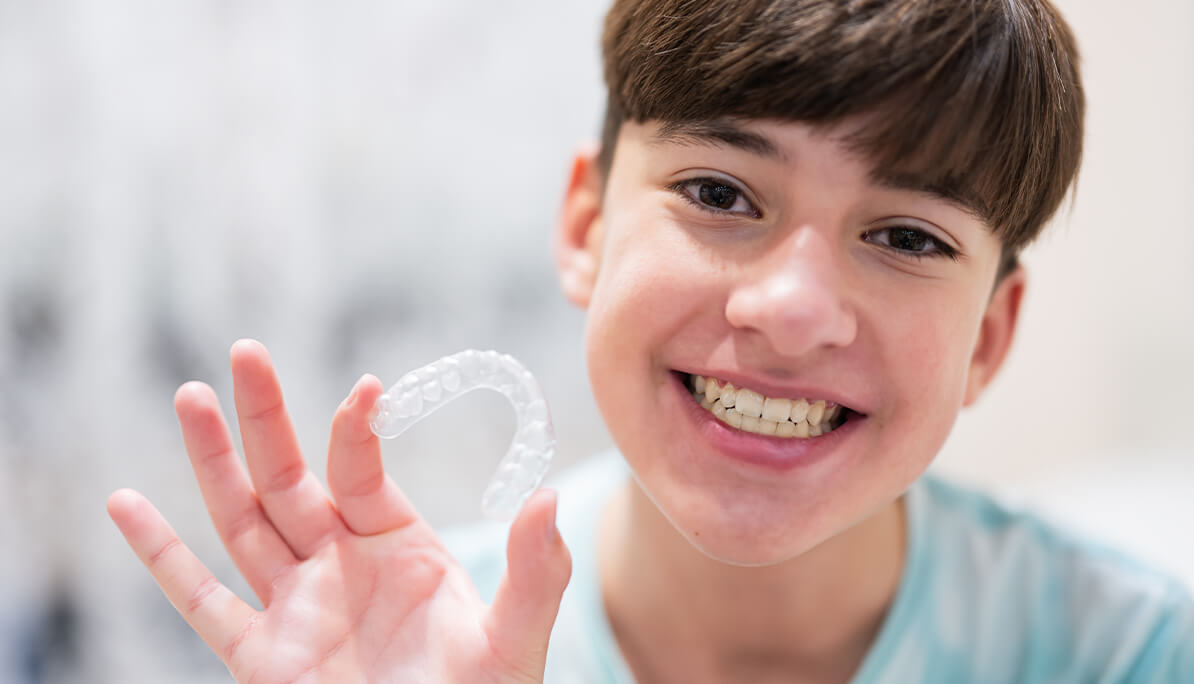
If your child needs early orthodontic help, you might be wondering whether clear aligners are an option or if braces are the only path. Many parents ask us the same thing at OPD Smiles in Allen, and the short answer is yes, some kids can have Invisalign®. It depends on age, dental development, and the goals of treatment.
This guide explains who qualifies, how Invisalign® First works for growing smiles, and what day-to-day life looks like with aligners. You will also find a balanced look at benefits and trade-offs, plus tips to help your child succeed.
Our pediatric dentists and orthodontists work together under one roof, so you get one trusted home for routine checkups, early interceptive care, and full orthodontics in Allen, TX.
Who Qualifies for Invisalign® as a Child
Eligibility for Invisalign® for children is based on dental development rather than a specific birthday. Many kids are first evaluated for orthodontics around age 7 when permanent incisors and first molars often arrive. At this stage, dentists and orthodontists can spot crowding, spacing, crossbites, and bite patterns that may benefit from early guidance.
Invisalign® First is designed for growing patients who still have a mix of baby and adult teeth. It can be a great fit for:
- Mild to moderate crowding or spacing
- Narrow arches that could benefit from guided expansion
- Crossbites or developing bite issues that are best addressed early
Some cases still do better with traditional appliances like expanders or limited braces. A consultation helps determine what will be most predictable for your child’s needs.
What Is Invisalign® First and How It Guides Growth
Invisalign® First is the clear aligner system tailored for younger children in the mixed dentition phase. The aligners are custom made and changed in a planned series to gently move teeth and develop arch width. This stage is often called Phase 1 treatment, and the goals are to:
- Create space for incoming permanent teeth
- Improve alignment and reduce crowding early
- Guide jaw and arch growth for a healthier bite
- Make brushing and flossing easier during key growth years
Unlike simple tooth straightening, early guidance focuses on the foundation. By widening a narrow arch or correcting a crossbite now, later treatment can be simpler and sometimes shorter during the teen years.
What Day-to-Day Life Looks Like With Aligners
Children typically wear Invisalign® aligners 20 to 22 hours per day, removing them only for meals, snacks, and brushing. Success depends on consistency, so most families build routines that make wear time second nature.
Here is what to expect:
Wear Time and Swaps
Your child will wear each set as directed, then switch to the next set on schedule. We show you when to change aligners at home.
Attachments or Buttons
Small tooth-colored shapes may be placed on some teeth to help create certain movements. These are smooth and temporary but worth knowing about in advance.
Eating and Brushing
Since aligners come out for meals, there are fewer food restrictions than with braces. Brushing after eating before reinserting the aligners helps keep them clear and your child’s teeth clean.
Check-Ins
We use quick in-person visits to track growth and progress. Our digital tools help make appointments efficient. Many families appreciate fewer emergency visits compared with braces, since there are no brackets or wires to break.
Benefits of Invisalign® for Kids
Parents often choose Invisalign® for a combination of comfort, convenience, and confidence. Common advantages include:
- Easier oral hygiene – Aligners come out for brushing and flossing, which can help kids keep cavities at bay.
- Fewer emergencies – No brackets or poking wires, so fewer urgent visits.
- Comfort – Smooth plastic can be more comfortable than brackets, especially for active kids.
- Confidence – Clear aligners are discreet, which helps some children feel more at ease at school and in photos.
- Flexible eating – No long lists of food restrictions, as aligners are removed to eat.
Trade-Offs and Limitations to Consider
Clear aligners are not a fit for every case or every child’s routine. A few things to weigh:
- Wear-time responsibility – Consistent wear is essential. If aligners stay out too long, progress slows.
- Case selection – Severe crowding, complex bite problems, or certain growth patterns may be better served with braces or other appliances.
- Attachments and elastics – Some cases still need small attachments or elastic wear, which can surprise families who expect no extras.
- Tracking – Aligner fit depends on switching on time and seating them fully. We teach simple tricks to help, like using chewies as recommended.
Our team will be honest about whether Invisalign® is likely to meet your child’s goals or if a different plan would be more predictable.
How Parents Can Support Success
Your support can make aligner life smooth and stress free. A few practical tips:
- Build routines – Set reminders for morning and bedtime wear checks, and for school lunches so aligners go back in right after eating.
- Create a simple travel kit – Include a case, mini toothbrush, and floss picks for after-school activities.
- Keep aligners safe – Always place them in the case, not a napkin that could get tossed.
- Celebrate progress – Small rewards for good habits help kids stay motivated.
A Kid-Friendly Visit From Start to Finish
OPD Smiles is designed for children. From quiet rooms and sensory-friendly scheduling to ceiling TVs, iPads, video games, prizes, and a photo booth, we make visits positive and low stress. Our pediatric dentists and orthodontists collaborate on every step, which saves you time and helps kids feel comfortable with familiar faces.
If you are searching for a local pediatric dental home with integrated orthodontics, our team is here to help. As your nearby orthodontist in Allen TX and Allen pediatric dentistry home, we guide families in Allen, Lucas, Plano, and Fairview.
For an overview of orthodontic options we offer, including Invisalign® for the right candidates, explore our orthodontics page with a local perspective from a Lucas orthodontist. If you are choosing a pediatric dentist in Allen TX, learn more about OPD Smiles and our approach to kid-centered care.
See more about our orthodontic care in your area: https://opdsmiles.com/orthodontics
Learn about our pediatric dentistry approach: https://opdsmiles.com
FAQ: Quick Answers for Busy Parents
Can Kids Have Invisalign®?
Yes, many children can, especially in a Phase 1 plan using Invisalign® First. Suitability depends on dental development, crowding or spacing, and bite goals. A consultation is the best way to know.
What Is Invisalign® First?
It is the Invisalign® system adapted for growing kids who still have a mix of baby and adult teeth. It can expand arches, create space, guide growth, and set the stage for a healthier bite.
What Are the Pros and Cons for Children?
Pros typically include easier brushing and flossing, fewer emergencies, comfort, and discreet appearance. Trade-offs include the need for consistent wear, potential attachments or elastics, and case limitations where braces may be more predictable.
Get Started in Allen, TX
Curious whether Invisalign® First is right for your child? Book a free orthodontic consultation with our friendly team. You will meet both pediatric dentists and orthodontists in one visit, get a growth-focused evaluation, and leave with clear next steps.
Book online anytime or call (972) 646-7774 to schedule.
OPD Pediatric Dentistry and Orthodontics, 501 South Angel Pkwy Suite 400, Allen, TX 75002.
The Bottom Line
Kids can have Invisalign® when their growth stage and treatment goals align with what clear aligners do best. Invisalign® First can widen arches, create space, and guide developing bites, often making later treatment simpler. If you want a practical, supportive path for your child, our integrated team at OPD Smiles is ready to help you make a confident, informed decision. Book online or call (972) 646-7774 to get started.