
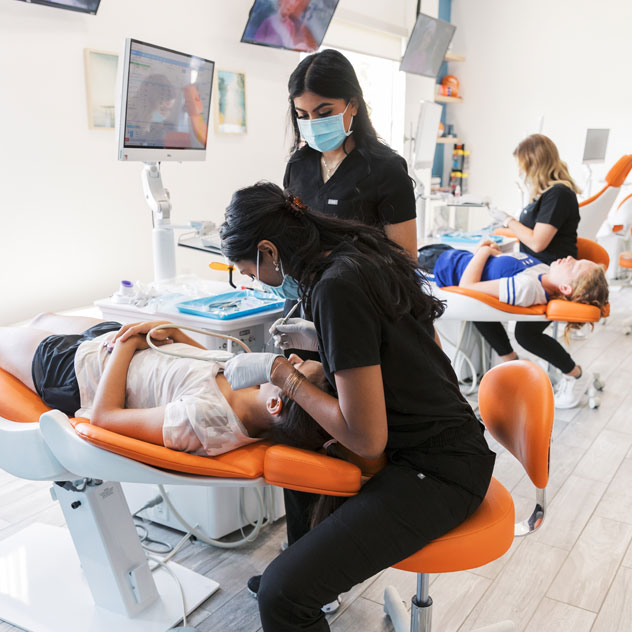
What Is a Child’s First Dental Visit?
By age 1, or within six months of their first tooth erupting (whichever comes first), your child should have their first dental visit. This recommendation from the American Academy of Pediatric Dentistry and the American Dental Association helps prevent early childhood cavities and builds positive associations with dental care from the start. At OPD Smiles in Allen, TX, our board-certified specialists welcome families with little ones as young as 12 months for this important milestone.
That first visit isn’t about complex work. It’s a gentle introduction to the practice designed for little ones. Your pediatric dentist will perform a quick exam, check your baby’s oral development, and answer your questions about teething, feeding habits, and keeping those tiny teeth healthy.
Think of it as laying the foundation for a lifetime of healthy smiles. When children start early, they grow up viewing dental visits as normal, not scary.
What Happens During the First Dental Visit
The first visit is short, sweet, and focused on comfort. Most visits last about 20 to 30 minutes.
Your child’s pediatric dentist will start by reviewing your little one’s health history. Expect questions about feeding routines, teething progress, and habits like thumb-sucking or pacifier use. This conversation helps the dentist understand your child’s specific needs.
For infants and young toddlers, the exam happens in a “knee-to-knee” position. You’ll sit facing the dentist with your child in your lap. From there, the little one gently reclines back onto the dentist’s lap for the exam. This keeps babies feeling secure while giving the dentist a clear view.
During the exam, the dentist will:
- Check emerging teeth for signs of decay or discoloration
- Examine gums for healthy development
- Assess bite alignment and jaw growth
- Look for any oral tissue abnormalities
If appropriate, your child may receive a gentle cleaning and fluoride varnish to strengthen tooth enamel. The dentist will also show you proper brushing techniques for your child’s age, because cleaning baby teeth is different from brushing your own.
You’ll leave with personalized guidance on nutrition, fluoride needs, and daily oral care routines.
Benefits of Starting Dental Visits Early
Early dental visits do more than just check teeth. They set your child up for better oral health throughout life.
How Do Early Visits Prevent Cavities?
Preventing early childhood cavities is the biggest benefit. Tooth decay is the most common chronic childhood disease, according to the Centers for Disease Control and Prevention. Starting dental care early helps catch problems before they become painful or expensive to treat.
Why Does Early Comfort Matter?
Building positive associations matters too. Children who visit the dentist before age 2 tend to feel more comfortable in the dental chair as they grow. They learn that dental visits are routine, not something to fear.
What Developmental Issues Can Be Caught Early?
Catching developmental concerns early gives you options. Your pediatric dentist can spot bite issues, alignment problems, or jaw development concerns when treatment is simpler and less invasive.
How Does Parent Education Help?
Educating parents is a core part of early visits. You’ll learn about:
- Which foods and drinks promote healthy teeth
- How to clean your baby’s mouth properly
- When to wean from bottles and pacifiers
- How fluoride protects developing teeth
Establishing a dental home with our team at OPD Smiles also means you have a trusted place to call when questions or emergencies arise. No scrambling to find help when your toddler chips a tooth on the coffee table.
First Visit by Age 1 vs. Waiting Until Age 3
Some parents wonder if age 1 is too early. Others remember being told to wait until age 3. Here’s why the guidance has changed.
| Factor | First Visit by Age 1 | Waiting Until Age 3 |
|---|---|---|
| Cavity risk | Lower, problems caught early | Higher, decay may already exist |
| Anxiety level | Typically lower | Often higher, more aware of surroundings |
| Parent education | Starts during critical habit-forming years | Misses early window for prevention |
| Long-term cost | Prevention-focused, less expensive | May require restorative treatment |
| Professional recommendation | Current AAPD and ADA standard | Outdated guidance |
Children who wait until age 3 are more likely to need treatment for existing cavities at their first visit. By then, they’re also more aware of their surroundings and may feel anxious about an unfamiliar setting. Some toddlers in that older age range have already developed sensitivities around new experiences, making the very first dental visit feel more intimidating than it needs to be.
The age-1 visit is about prevention and comfort-building. Your child learns that the dental practice is a friendly place before they’re old enough to develop fears about it. Families in Allen, TX who follow the age-1 guideline often find that follow-up visits go more smoothly because their little one already knows the team and the space.
What Affects the Cost of a First Dental Visit
Most first dental visits are often covered 100% by dental insurance as preventive care, with any out-of-pocket costs depending on additional services and existing treatment needs. First dental visits are typically shorter and less complex than standard adult cleanings, which usually means lower costs overall.
Insurance coverage often helps significantly. Most dental plans cover preventive pediatric visits at 100%. Check with your provider to confirm your specific benefits before scheduling.
Additional services may add modest fees:
- Fluoride varnish application
- X-rays (rarely needed at the first visit)
- Nutritional counseling
Treatment needs affect cost if decay is already present. A child with visible cavities may need follow-up visits for treatment, which adds to the total investment.
Many practices offer new-patient pricing or family discounts. At OPD Smiles in Allen, TX, our team explains your coverage clearly so you know what to expect before your child’s visit.
Signs Your Child Is Ready for Their First Visit
Wondering if it’s time to schedule? Look for these indicators.
Your child’s first tooth has appeared.
Most babies get their first tooth between 6 and 12 months. Once you see that little white cap poking through, it’s time to book.
The first birthday is here.
Even if teeth haven’t erupted yet, the one-year mark is your cue to schedule.
You may also notice changes in your child’s teeth. White spots, discoloration, or rough patches on tooth surfaces warrant prompt attention. These can signal early decay.
You have concerns about oral habits.
Thumb-sucking, pacifier use, or prolonged bottle feeding can affect oral development. Your pediatric dentist can offer guidance specific to your child’s situation.
Family history matters too. Cavity-causing bacteria can pass from caregivers to children. If you or your partner had childhood cavities, early prevention becomes even more important.
Your child has experienced mouth trauma.
Falls happen. If your little one has bumped their mouth or injured a tooth, schedule a visit even if everything looks fine. Our team at OPD Smiles is happy to take a look and put your mind at ease.
Starting dental visits early is one of the most meaningful steps you can take for your child’s long-term health. Our specialty-trained pediatric dentists in Allen, TX have years of training after dental school, specifically preparing them to care for little ones with patience and expertise. We love helping kids truly enjoy coming to the dentist, and that positive experience starts with the very first visit.
Frequently Asked Questions
Will my baby need X-rays at the first visit?
Usually not. Pediatric dentists rely on visual exams for little ones at this age. X-rays typically become part of dental care around age 2 or 3, once back teeth have erupted and are touching. Your dentist may recommend earlier X-rays only if there’s a specific concern, like suspected decay between teeth or a developmental issue.
How do I prepare my child for the visit?
Keep it simple and positive. Read picture books about visiting the dentist. Play pretend dental visits at home with a toothbrush and mirror. Avoid using words like “hurt” or “shot.” Let your child know they’ll meet a friendly doctor who helps keep teeth healthy and strong.
Should I bring my child to my own dental visits first?
Yes, this can help. Watching you sit calmly in the dental chair shows your child there’s nothing to fear. Many pediatric dentists encourage this approach. Just make sure your own visit is routine, not the best time for your child to observe a root canal.
What if my child cries or refuses to cooperate?
Completely normal. Pediatric dentists train extensively in working with young patients. They use gentle techniques, distraction, and age-appropriate communication to help children feel safe. Sometimes the first visit is just about getting comfortable in the setting. That’s okay. Progress matters more than perfection.
How often should children visit the dentist after the first visit?
Every six months is the standard recommendation. Regular visits allow your pediatric dentist to monitor development, catch problems early, and reinforce good habits. Some children with higher cavity risk may benefit from more frequent visits.
Are baby teeth really important if they fall out anyway?
Absolutely. Baby teeth hold space for permanent teeth. When a baby tooth is lost early due to decay, neighboring teeth can shift into the gap. This creates crowding and alignment problems when adult teeth try to emerge. Baby teeth also affect speech development and help children chew food properly for good nutrition.