
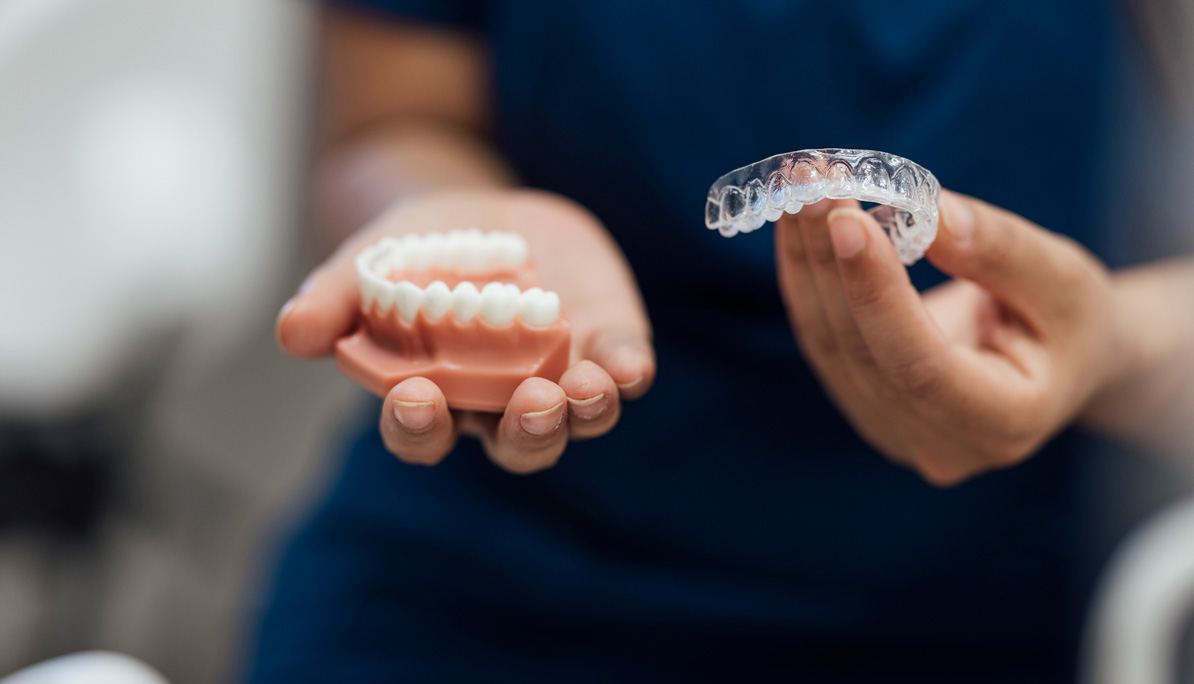
Thinking about straightening your teeth as an adult is exciting, but the choice between Invisalign® and traditional braces can feel overwhelming. You want a confident smile, minimal disruption to your routine, and a treatment plan that actually fits your life. In this guide, our OPD Smiles orthodontists break down the differences in plain language so you can make a decision with ease.
Invisalign® and Braces at a Glance
Both Invisalign® and braces move teeth using controlled, gentle force. They differ in how they look, how you wear them, and how they fit day to day.
- Invisalign®: A series of removable, nearly invisible clear aligners you change every one to two weeks. You wear them 20 to 22 hours a day and remove them to eat and brush.
- Braces: Small brackets bonded to teeth with a wire that guides movement. Options include metal and clear ceramic brackets. They stay on your teeth until treatment ends.
Both options can be highly effective for adults. The right choice depends on your goals, lifestyle, and the complexity of your bite.
The Pros and Cons of Invisalign® for Adults
Invisalign® has become a favorite for many adult patients who want an efficient and discreet path to a straighter smile.
Pros:
- Discreet look: Clear aligners are hard to notice in photos, at work, and on video calls.
- Removable convenience: Take aligners out for meals, brushing, and flossing. No food list to memorize.
- Comfortable edges: Smooth plastic can be gentler on cheeks and lips.
- Easier hygiene: Since you remove aligners, you can keep your brushing and flossing routine simple.
- Fewer office visits in many cases: Digital planning and longer intervals between visits are common.
- Great for busy schedules: You can switch trays at home following your orthodontist’s instructions.
Cons:
- Wear time discipline: Success depends on wearing aligners 20 to 22 hours per day. If that sounds tough, results can lag.
- Not ideal for every case: Severe crowding, certain bite issues, or complex tooth movements may need braces or attachments and elastics that add visibility.
- You can misplace them: Removable aligners can be lost or damaged if you set them aside during meals.
Good candidates for Invisalign® are motivated to wear aligners consistently, prefer a low profile look, and have mild to moderate alignment or bite needs. Many adults fall into this category.
The Pros and Cons of Traditional Braces for Adults
Braces remain a powerful, versatile option that can handle simple to complex cases with precision.
Pros:
- Broad capability: Braces can efficiently treat more complex bites, rotations, and vertical corrections.
- No compliance worry: Since braces stay on your teeth, you are never under-wearing them.
- Options for appearance: Clear ceramic brackets blend with teeth for a subtler look than metal.
- Fine-tuned control: Your orthodontist can make micro-adjustments chairside to guide movement.
Cons:
- Visibility: Even ceramic braces are more noticeable than clear aligners.
- Food adjustments: Sticky, hard, or crunchy foods can damage brackets and wires. You will get a clear list to follow.
- Oral hygiene takes more effort: Brushing around brackets and flossing under wires requires tools and technique.
- Occasional pokes: Wires and brackets may irritate cheeks or lips at times, though wax and quick adjustments help.
Braces can be a great choice if you want a set it and forget it approach, have complex bite needs, or prefer a predictable timeline without relying on daily wear habits.
Comfort, Speed, and Results
- Comfort: Many adults find aligners more comfortable at first. Braces may cause mild soreness after adjustments or when brackets are new. Either way, any tenderness usually settles within a few days.
- Treatment time: Average treatment time is similar for many adult cases. Complexity and compliance matter more than the type of appliance. Your orthodontist will give you a personalized estimate at your exam.
- Results: Both Invisalign® and braces can deliver excellent outcomes when planned and monitored by an experienced orthodontist. The key is choosing the appliance that matches your case and lifestyle.
What Daily Life Looks Like
- Eating: With Invisalign®, remove aligners to enjoy your meals and brush before putting them back in. With braces, you will avoid hard and sticky foods, but you can still enjoy a wide variety with a little planning.
- Oral hygiene: Invisalign® lets you brush and floss as usual. With braces, you will use interdental brushes, floss threaders, or a water flosser to clean around brackets and under the wire.
- Work and social settings: Aligners are nearly invisible, which many adults love for presentations and photos. Ceramic braces offer a lower profile than metal if you prefer braces.
- Travel: With Invisalign®, bring your next set of aligners and a travel case. With braces, carry wax and a small dental kit. Both options travel well with a few simple preparations.
How to Decide What’s Better for You
Ask yourself:
- How complex are my alignment and bite concerns? Some movements are faster and more predictable with braces.
- Will I wear aligners 20 to 22 hours daily without fail? If not, braces may be the safer choice.
- Do I want the least visible option? Invisalign® or ceramic braces are both discreet, with aligners being the lowest profile.
- How do I feel about food restrictions and cleaning routines? Aligners simplify meals and hygiene, while braces require more adjustments.
The most reliable way to choose is through a comprehensive exam with digital scans, photos, and a conversation about your goals. At OPD Smiles, we offer complimentary orthodontic consultations for adults. We will outline your options, estimate your timeline, and compare costs and financing so you can decide with confidence.
If you are exploring aligners, learning more about Invisalign® in Allen can be a helpful next step. You can read about our approach to Invisalign® in more detail by visiting invisalign allen tx.
Our Team’s Perspective and Patient Experiences
We often meet adults who delayed treatment because they thought braces were only for teens. Many are surprised to learn how tailored adult orthodontics has become. For busy professionals, aligners fit seamlessly into meetings and travel. For complex bites, patients appreciate how braces stay on and move steadily without daily wear decisions.
Our board-certified orthodontists use advanced diagnostics and in-house technologies to customize your plan. Some adults benefit from hybrid approaches like limited braces paired with aligners later, or ceramic braces for aesthetics. Your plan should feel realistic for your routine and aligned with your timeline.
Cost, Insurance, and Financing
Costs vary based on your treatment plan and duration. We accept many PPO plans and will help you maximize benefits. Flexible financing through CareCredit is available, and we are happy to review monthly options that fit your budget during your consultation.
Ready to Explore Your Options?
Choosing between Invisalign® and braces is not about finding the one best treatment – it is about finding the best treatment for you. If you are near Allen or Lucas, our friendly team would love to meet you, answer your questions, and create a plan that feels right. Learn more about our orthodontic care with lucas orthodontics, or schedule your complimentary consultation to get started.
Key Takeaways
- Invisalign® offers a discreet, removable option that works well for many adult cases if you can commit to consistent wear.
- Braces provide excellent control, fewer compliance concerns, and can treat more complex bites, with ceramic brackets offering a more subtle look.
- Treatment time and results depend on your specific case and the quality of your plan more than the appliance type.
- A personalized consultation is the fastest path to clarity and confidence.
When you are ready, the OPD Smiles team is here to guide you with expertise and kindness, from your first scan to your final smile.